It's 2026, and looking back, I still remember the day we first set foot on Penacony. As a Trailblazer who's been on this cosmic journey since the beginning, I can tell you, that place was a real head-turner. HoYoverse really outdid themselves with the 2.0 update, didn't they? One minute we're dealing with the frosty politics of Belobog, and the next, we're invited to this lavish, dreamlike metropolis for a vacation. Talk about a plot twist! The anniversary year was a whirlwind, and Penacony, with all its glittering secrets, became the heart of it all. It wasn't just a new map; it felt like the game itself was learning to walk on walls, just like we could in the Golden Hour. The team listened, they really did, and they wove our feedback right into the fabric of this dream.
Whispers from the Devs: Building a Dream from Feedback
You know what's wild? The devs actually mentioned our obsession with those interactive trash cans and the character messages. I mean, who knew our little quirks would shape a whole world? In Penacony, they cranked the interactivity up to eleven. Those billboards that chase you down the street? Absolutely unhinged, in the best way possible. And the Dreampeek Call feature, where you can peek into other characters' dreams? That's the kind of detail that makes a world feel alive. It's like the developers were whispering, "We see you, we hear you." And then there was the big one—the jumping meme. Oh, the memes! We all laughed about the Trailblazer's two left feet, unable to leap a small crate. So, what did they do? They gave us the power to walk on walls. Not jump, mind you, but something infinitely cooler and more thematic. It perfectly matched the topsy-turvy logic of a dream world and finally let us show off that "versatile neutral shift ability" we'd only heard about in lore. It was a brilliant move, a real "aha!" moment that showed player feedback wasn't just going into a void.
The Inspiration Behind the Illusion: From Steampunk to Starlight
So, where did this kaleidoscopic world come from? The developers shared that Penacony's origins were a journey in themselves. Initially, they toyed with a Victorian-era, steampunk vibe—a world of giant clockwork. But it felt too close to Belobog's industrial aesthetic. The story needed stars, it needed grandeur. So, they pivoted, blending the roaring energy of the Jazz Age with the boundless possibilities of the Land of Dreams. The core idea of "the stillness of time" remained, but now it was expressed through twelve distinct Dreamscapes, each frozen at a different hour. Want a midday shopping spree or a midnight revelry? In Penacony, you can chase pleasure at any time. It’s a hedonist's paradise, a perfect stage for the tale of alliances and betrayals that was about to unfold. Designing it was a mix of challenge and delight, and honestly, playing through it felt the same way.
Unraveling the Mystery: Storytelling Across the Stars
Now, let's talk about that story. Version 2.0's narrative hit like a freight train. The gathering of factions, the glamour, the sudden, shocking accidents involving Robin and Firefly... and that cliffhanger! I was left staring at my screen, my jaw on the floor. The developers said their guiding principle is simply "telling a good story," and boy, did they deliver. Weaving a complex mystery across multiple updates is no small feat. They have to maintain logical continuity so we don't get lost between versions, all while dropping enough breadcrumbs to keep us hungry for more. To help us navigate the web of motives in Penacony, they introduced the Fate's Ensemble feature in 2.1. Being able to switch perspectives and explore alongside the Crew was a game-changer. It made the world feel bigger and the secrets feel deeper. It’s like the game was trusting us with more pieces of the puzzle.
Characters That Dream and Scheme: Kit Complexity and Design
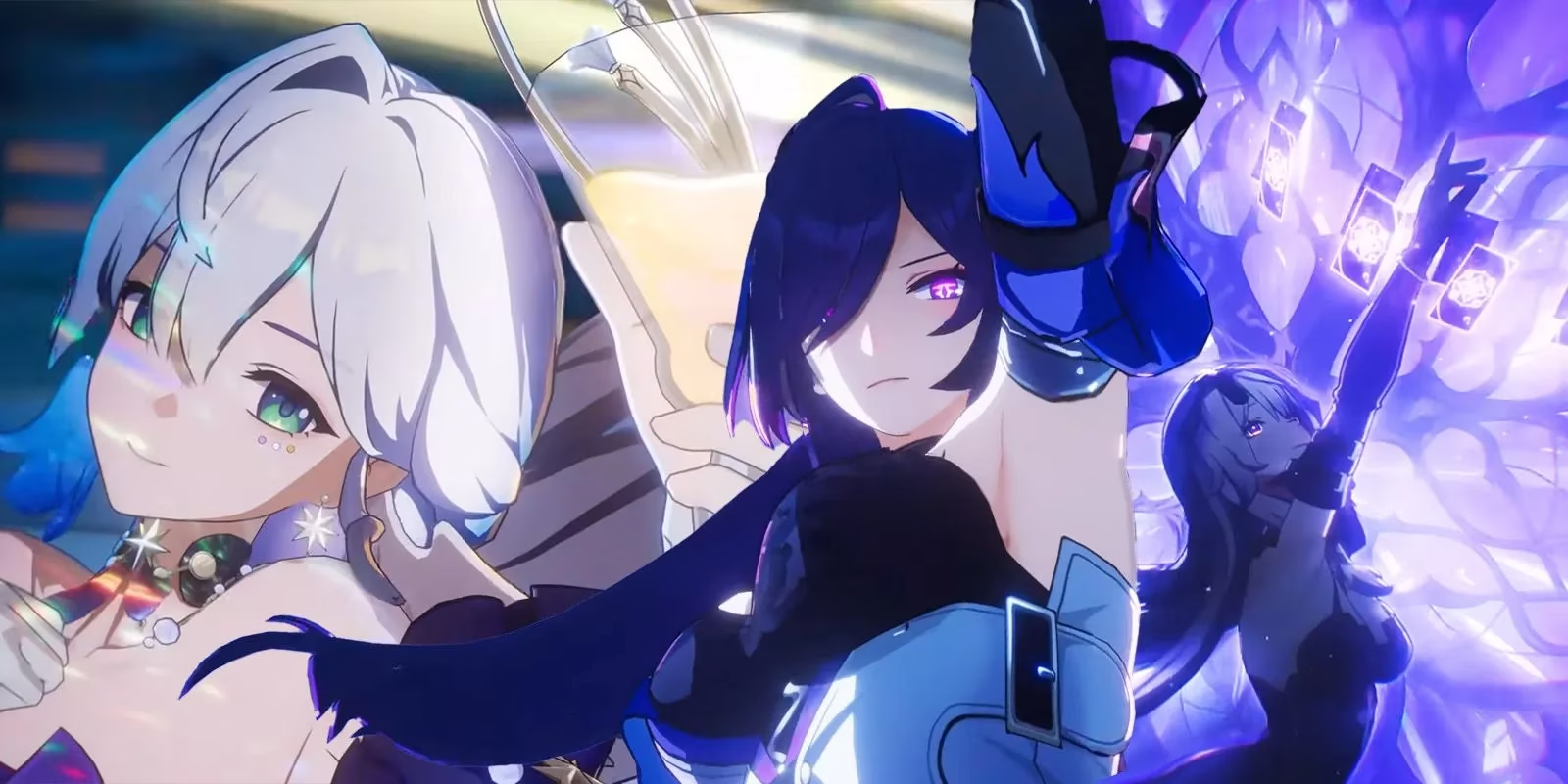
The new characters who arrived with this dream were something else. Take Black Swan, for instance. She glides onto the scene with this languid, oracle-like grace, but her kit? Oh, it's a beautiful beast. She upped the ante for Damage-over-Time (DoT) teams, blending serious DPS with potent support in a way that felt both niche and incredibly powerful. It made me wonder: was this increased complexity always the plan, or did the team grow more confident after a year of player feedback? The answer seems to be a bit of both. They listen intently, but they also have a vision for evolving gameplay. Black Swan isn't just a combat unit; her entire being is intertwined with Penacony's themes. As a Memokeeper from the Garden of Recollection, her connection to memory is the bedrock of dreams. Her noble, ethereal design and her combat style—floating tarot cards and all—scream "dream weaver." She’s a perfect example of aesthetic and gameplay marrying the world-building.
And we can't forget the others who followed!
-
Sparkle: The mischievous little devil! A versatile support who lets your team spam skills without worry. She's a chaos agent in the best way.
-
Acheron: Ah, the lone wolf with a long sword introduced in 2.1. Cold, reserved, and devastatingly powerful. Her unique Technique that can instantly down regular enemies was a godsend for exploration. She has that silent, deadly appeal that's just... chef's kiss.
The devs said it's hard to pick an "ideal" design because they pour love into each one, and I believe it. Each character brings a new strategy, a new flavor to the Astral Express.
The Technical Magic: Making Dreams Run Smoothly
Creating a dream within a sci-fi fantasy game? Yeah, that sounds like a technical nightmare. The art team had their work cut out for them. They built a city where skyscrapers sprout from parched land, where billboards are sidewalks, and where the city literally runs on beverages. Whimsical touches like Clockie and Brother Hanu remind you not to take anything too seriously. Then there are the mind-bending moments: walking on walls, seeing gravity distort, watching ethereal whales swim through a neon sky. These aren't just pretty visuals; they're the language of dreams, and making them run seamlessly, especially on mobile devices, is a testament to the team's cross-platform commitment from day one. They invested heavily to ensure that whether you're playing on a powerhouse PC or a phone, the dream of Penacony remains vivid and immersive.
The Road Ahead: A Flexible Constellation of Stories
So, what's next? Where is the Astral Express headed? The developers have the main plot points charted for the stars, ensuring a coherent and logical journey. But they've also left themselves room to adapt, to weave in new inspirations based on our journey together. It's a living story. As for Penacony itself, they've been coy. The dream isn't over. There are still whispers in the corridors of the Reverie Hotel, secrets buried in the memories of the Dreamscapes. We've only seen the first act of this particular drama.
Reflecting on it now, Penacony was more than an update; it was a statement. It showed that Honkai: Star Rail was confident, listening, and ready to dream bigger. They took our feedback and built a world where we could literally defy gravity. They crafted a mystery that had us theorizing for months. And they introduced characters who weren't just powerful, but were poetic extensions of the world itself. As a Trailblazer, it's been a privilege to walk these walls and unravel these dreams. Here's to the next leg of the journey—wherever the stars may lead us. The future's looking bright, and maybe a little bit dreamy.